From Our Founder
The Road That Changes You
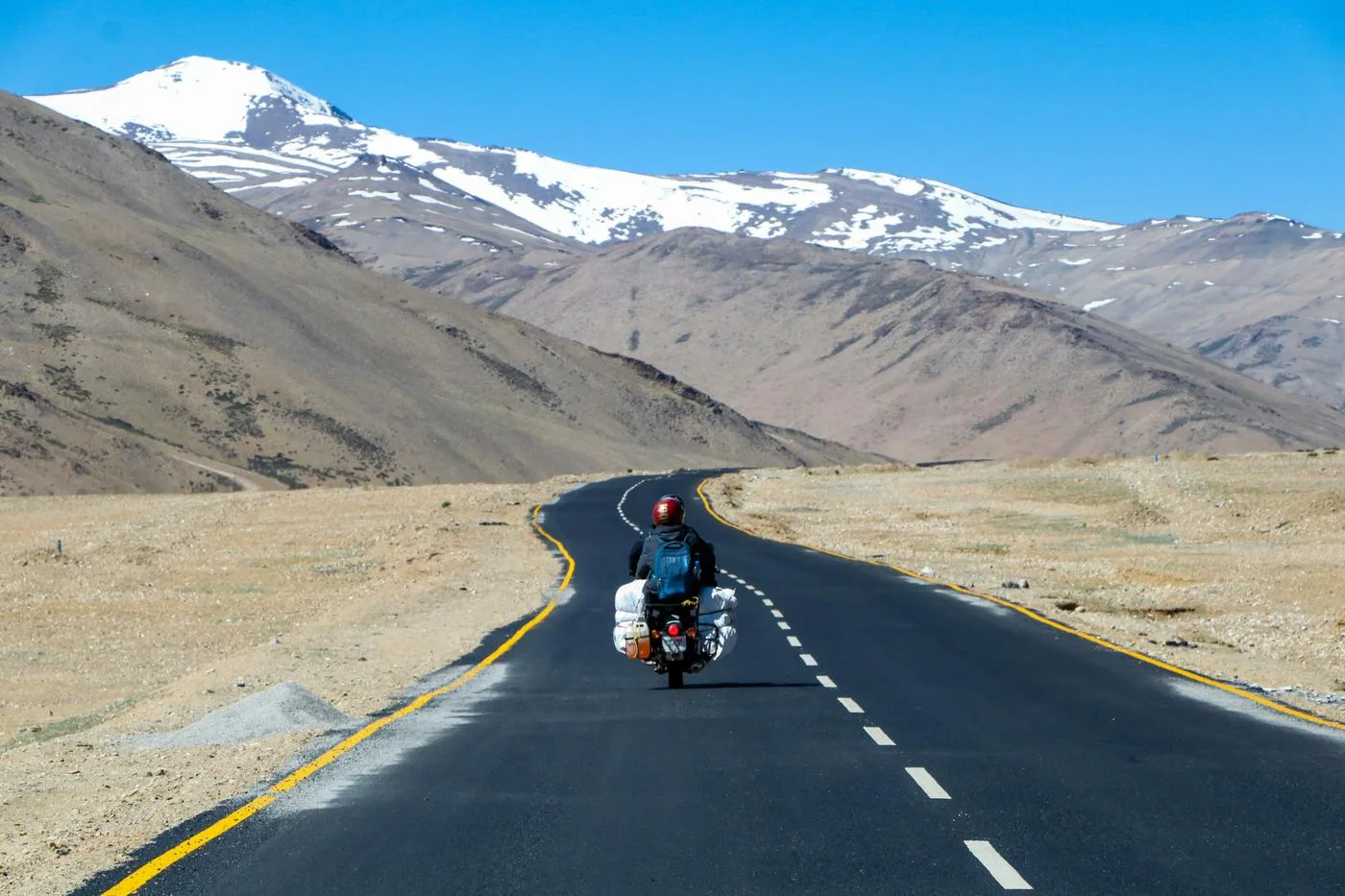
The first time I drove from Srinagar to Leh, I was twenty-three. I remember coming through the Zoji La pass and seeing the landscape change in a matter of minutes. One side was green valleys and pine forests. Kashmir. The other side was brown rock and empty sky and silence. Ladakh. It was like crossing into another planet.
I have done that drive dozens of times since. It never stops being extraordinary.
This is the trip people remember for the rest of their lives. Not because of any single moment, but because of the contrast. You start on a houseboat on Dal Lake, surrounded by lotus blossoms and Mughal gardens and the gentle rhythms of Kashmir. Then you cross the Himalayas by road. The landscape strips away everything familiar. Trees disappear. Rivers become canyons. Mountains turn from green to brown to grey to purple. You climb over Zoji La at 3,500 metres, drive through Drass, the second coldest inhabited place on earth, and arrive in Kargil as the sun sets over barren peaks. The next day you reach Leh, with its monasteries perched on cliffs and prayer flags snapping in the wind.
And then it gets even more dramatic. Khardung La at 5,359 metres. Nubra Valley with its sand dunes and double-humped camels. And Pangong Lake, a 134-kilometre ribbon of turquoise water stretching into China, changing colour every hour.
We have been running this Kashmir-Ladakh route for years. Bilal, who leads our adventure trips, knows every pass, every rest stop, every monastery. We handle all the permits. We plan the acclimatisation carefully. You just need to be ready for something that will stay with you long after you get home.
Good to Know
Before You Travel to Ladakh
Ladakh is high-altitude terrain. It is beautiful and safe, but it requires preparation. Here is what you need to know.
Important Considerations
Journey Highlights
What Makes This Trip Extraordinary
Your Itinerary
Ten Days, Day by Day
Arrival in Srinagar -- Dal Lake Welcome
You land at Srinagar Airport. The air is cool and clean and carries the smell of chinar trees and lake water. Your driver meets you outside and takes you to your houseboat on Dal Lake. A houseboat is not a hotel. It is a carved cedar home floating on water, with silk curtains and walnut furniture and a silence that no hotel can match. The staff greet you with kahwa, the Kashmiri green tea with saffron and almonds, and show you to your room. The windows look out over the lake. In summer, lotus blossoms cover the water surface, and Shikaras glide between them, and the Zabarwan mountains rise green behind everything. Take the afternoon to settle in. Walk on the narrow plank that connects your houseboat to the shore. Watch the sunset over the Pir Panjal range. The sky turns gold and pink and the lake reflects every colour. Dinner is on board. The cook makes rogan josh and haak saag and lotus stem, and you eat at a table with candles while the lake laps gently against the hull. This is where your journey begins. Tomorrow the mountains.
Srinagar Sightseeing -- Gardens and Old City
A full day in Srinagar before you head into the high Himalayas. You start at the Mughal gardens. Nishat Bagh, built in 1633, has twelve terraces of roses and fountains, with Dal Lake below and the mountains above. Shalimar Bagh is older, more formal, with grand chinar trees that provide shade so deep the temperature drops noticeably. Then Shankaracharya Temple, perched on a hill above the city. The walk up takes fifteen minutes and the view from the top shows you the entire Kashmir Valley. The lake, the gardens, the old city spreading along the riverbanks. After lunch, the old city itself. Jama Masjid with its 370 wooden pillars is one of the most beautiful mosques in India. Shah-i-Hamdan shrine sits on the banks of the Jhelum River. The narrow lanes of Nowhatta are where copper workers and papier-mache artists have worked for generations. In the evening, Lal Chowk for shopping. This is your last full day in the valley. Tomorrow you start climbing. Your hotel for tonight is in Srinagar. A proper bed, a hot shower, a good meal. You will miss these things on the other side of the Himalayas.
Gulmarg -- Gondola and Meadows
A day trip to Gulmarg before you head east towards Ladakh. The drive takes about ninety minutes, climbing through apple orchards and rice paddies into the mountains. Gulmarg in summer is a wide bowl of wildflowers surrounded by pine forests, with the Pir Panjal range behind. The Gulmarg Gondola, one of the highest cable cars in Asia, takes you to Phase 1 at 3,980 metres. The view is a panorama of snow-capped peaks and green valleys stretching to the horizon. Phase 2, if weather permits, goes to 4,267 metres. This is also a gentle introduction to altitude. You are going much higher in the coming days, and a few hours at 4,000 metres helps your body start adjusting. Back in the meadow, you can walk through wildflowers, have a picnic, and breathe some of the cleanest air on the planet. The drive back to Srinagar follows the same beautiful road through orchards and villages. Early dinner and an early night. Tomorrow is a long drive day.
Srinagar to Kargil -- Crossing Zoji La
This is the day the journey changes. You leave Srinagar early, before dawn if possible, because the drive to Kargil is about 230 kilometres and takes six hours or more depending on conditions. The first stretch follows the Sindh Valley, the same road that goes to Sonamarg. Pine forests and waterfalls and the turquoise Sindh River below. Then Sonamarg, the Meadow of Gold, where you stop for tea and a last look at the green Kashmir Valley. And then Zoji La. The pass sits at 3,528 metres. It is narrow and unpaved in sections and it is the most dramatic road crossing on this entire trip. On one side, everything is green. Kashmir. On the other side, the vegetation disappears. The mountains turn brown and grey and the sky seems to double in size. You have crossed into Ladakh. The descent takes you through Drass, officially the second coldest inhabited place on earth. In summer it is fine. The Kargil War Memorial is here, and worth a stop. The mountains above Drass are bare and enormous and the silence is deep. You reach Kargil by late afternoon. The town sits in a valley where the Suru River meets the Wakha. It is a different world from Srinagar. Dry air, barren mountains, a different culture. Dinner at your hotel. Rest well. Tomorrow you meet Ladakh properly.
Kargil to Leh -- Monasteries and Moonlands
Another long drive day, but this one might be the most visually extraordinary day of the entire trip. Kargil to Leh is about 230 kilometres, and every hour the landscape shifts. You drive through the Mulbekh Valley, where a 9-metre rock carving of Maitreya Buddha stands at the roadside, carved into a boulder over a thousand years ago. Then Namika La pass at 3,700 metres, and the landscape becomes increasingly surreal. Fotu La at 4,108 metres. And then Lamayuru. Lamayuru Monastery is one of the oldest in Ladakh, perched dramatically on a cliff above a valley that looks like the surface of the moon. Eroded ridges and gullies stretch in every direction, brown and grey and orange, with the monastery rising above it all like something from a dream. You stop here for an hour. Walk through the monastery. Look at the murals and prayer wheels and the view. Then onwards to Leh, passing Magnetic Hill, where vehicles appear to roll uphill, and Sangam, where the Indus and Zanskar rivers meet. One river is blue. The other is brown. They flow side by side for a hundred metres before merging. You reach Leh by evening. The town sits at 3,500 metres. The air is thin. The sky is enormous. Prayer flags flutter from every rooftop. Check in to your hotel. Move slowly. Drink water. Rest.
Leh Acclimatisation -- Palace and Monasteries
This is a mandatory rest day and one of the most important days of the trip. At 3,500 metres, your body needs time to adjust to the reduced oxygen. Altitude sickness is real and it does not care how fit you are. So today is gentle. No high passes. No strenuous activity. Just Leh. You start with a walk through Leh Market, the old bazaar that has been the trading hub of Ladakh for centuries. Tibetan jewellery, turquoise stones, yak wool shawls, thangka paintings. The shopkeepers are friendly and unhurried. Then Leh Palace, a nine-storey structure built in the 17th century that looks like a smaller version of the Potala Palace in Lhasa. The walk up is gradual and the view from the top shows you the entire Leh Valley with the Stok Kangri range behind it. After lunch, the monasteries. Thiksey Monastery is built on a hillside in the same style as the Potala, with a 15-metre seated Buddha inside. Shey Palace was the ancient capital of Ladakh and has a 12-metre Buddha in copper and gold. Hemis Monastery is the largest in Ladakh, famous for its masked dance festival. Each one is different. Each one is ancient and beautiful and quiet. In the evening, back at your hotel, the staff serve butter tea. It is salty and rich and exactly what your body needs at altitude. Early dinner. Early sleep. Tomorrow you go over Khardung La.
Nubra Valley via Khardung La
Today you drive over one of the highest motorable roads on earth. Khardung La sits at 5,359 metres. The road from Leh climbs steadily for about forty kilometres. The landscape strips away to nothing. Rock, sky, and the thin white line of the road ahead. At the top, the air is half as thick as at sea level. You step out of the car and feel your heart pounding. Prayer flags snap in a wind that feels like it comes from the edge of the world. The view stretches forever. Peaks and valleys and clouds below you. You do not stay long. Ten minutes for photos, then descend into Nubra Valley. The descent is dramatic. The barren rock gives way to green. A river appears. Then trees. Then villages with irrigation channels and barley fields. Nubra Valley is an oasis. It feels impossible that this place exists at the bottom of those mountains. Your first stop is Diskit Monastery, perched on a cliff above the valley with a 32-metre Maitreya Buddha statue standing in front of it. Then Hunder, where sand dunes rise from the valley floor and Bactrian double-humped camels walk across them. These camels were brought here centuries ago along the Silk Road. You can ride one across the dunes as the sun sets. Overnight in Nubra Valley, in a camp or guesthouse depending on your package tier. The stars here are extraordinary. No light pollution. The Milky Way is so clear it casts a shadow.
Nubra Valley to Pangong Lake
The drive from Nubra to Pangong is about 160 kilometres and takes roughly five hours. It follows the Shyok Valley, a route that was only recently opened to tourists. The road runs along the Shyok River, a wide braided stream that changes colour with the light. Brown, green, turquoise. The valley is wide and flat in places, narrow and rocky in others. You cross a pass at about 4,300 metres and then begin the descent towards Pangong. You see the lake before you reach it. A sliver of impossible blue between brown mountains. Then you get closer and the blue becomes turquoise, then green, then grey, then back to blue. Pangong Tso is 134 kilometres long, stretching from India into China. Only a third of it is in India. The lake has no outlet. The water is brackish. Fish do not survive. And yet it is one of the most beautiful bodies of water on earth. The colours change with the light, the clouds, and the time of day. Morning is deep blue. Noon is turquoise. Sunset turns it into shades you have never seen before. Your camp is on the shore. You set down your bags and walk to the water. It is cold. The mountains rise directly from the shore, barren and enormous. There is no sound except the wind and the gentle lapping of water. Dinner in the camp. The cook makes dal and rice and chapati and hot soup, and you eat under a sky that has more stars than you thought existed.
Pangong Lake to Leh -- Sunrise and Return
Set your alarm early. Sunrise at Pangong Lake is something you will remember for the rest of your life. The mountains to the east catch the first light and turn pink, then gold. The lake, which was dark and still in the pre-dawn, begins to change colour. Deep blue to light blue to turquoise. The reflection doubles everything. The mountains, the sky, the colour of the water. It is so quiet you can hear your own breathing. Take your time. Walk along the shore. Touch the water. Let it sink in that you are standing at 4,350 metres beside a lake that extends into another country, in a landscape that looks like it belongs on another planet. After breakfast at the camp, you begin the drive back to Leh. About 160 kilometres, roughly five hours. The route goes through Chang La pass at 5,360 metres, one of the highest passes on this trip. Then down through the village of Chemrey, where there is a small monastery worth a brief stop. You reach Leh by afternoon. The town feels almost familiar now. The thin air is normal. The prayer flags are normal. The mountains are normal. This is what happens on a trip like this. The extraordinary becomes your baseline. Evening at leisure. Leh Market for last-minute souvenirs. A farewell dinner at your hotel. Butter tea. Thukpa soup. And the quiet satisfaction of having crossed the Himalayas by road.
Fly Leh to Home
Your last morning in the Himalayas. Breakfast at the hotel. The mountains outside the window are sharp against a sky that is the deepest blue you have ever seen. That is the Ladakh sky. Thinner air means less moisture, and the colour of the sky here is something photographers travel thousands of miles to capture. Check-out is relaxed. Your driver takes you to Leh Airport, which sits in the valley with mountains on every side. The flight takes off and the view from the window is extraordinary. You see the entire Indus Valley below. The monasteries. The river. The brown mountains folding into each other. And in the distance, if the sky is clear, you can see the green of Kashmir. The two landscapes you have crossed in ten days. Most of our guests on this trip tell us the same thing. It was not what they expected. It was more. Not just the beauty or the altitude or the road. But the scale of it. The feeling of being small in a big landscape. The kindness of people who live in one of the harshest environments on earth. And the silence. The silence stays with you. We will be here next June.
What\'s Included
- +9 nights accommodation -- houseboat, hotels, and camps
- +All meals -- breakfast and dinner (MAP)
- +Private cab throughout the journey
- +Inner Line Permits for Nubra Valley and Pangong Lake
- +English-speaking professional guide
- +Airport and railway station transfers
- +All toll taxes and parking charges
Not Included
- -Airfare to and from Srinagar and Leh
- -Khardung La entry fee
- -Personal expenses and tips
- -Adventure activities (camel ride, rafting)
- -Oxygen cylinder (recommended to carry)
- -GST (5%) on package value
- -Anything not listed under inclusions
Pricing
Choose Your Stay
Same route, same driver, same guide. The difference is your accommodation at each stop and the level of camp at Pangong and Nubra.
| Category | Per Person | Accommodation |
|---|---|---|
| Standard | 28,999 | 3-Star Hotels + Basic Camps |
| Deluxe | 36,999 | 4-Star Hotels + Deluxe Camps |
| Premium | 48,999 | 5-Star Hotels + Premium Lakeside Camps |
Prices per person on twin-sharing basis. Solo supplement applicable. Child (5-11 yrs) at 50% off.
Start Planning
Ready for Kashmir and Ladakh?
This is a road trip that needs to be planned well in advance. Permits, acclimatisation, and camp bookings take time. Share your dates and we will send you a complete itinerary shortly.
Plan Your Journey
Share your details and we'll craft a personalised itinerary for you.
Or WhatsApp us: +91 88991 33899
Prefer to talk?
WhatsApp UsWhy Trivilio for This Route
Built for High-Altitude Travel
Explore More